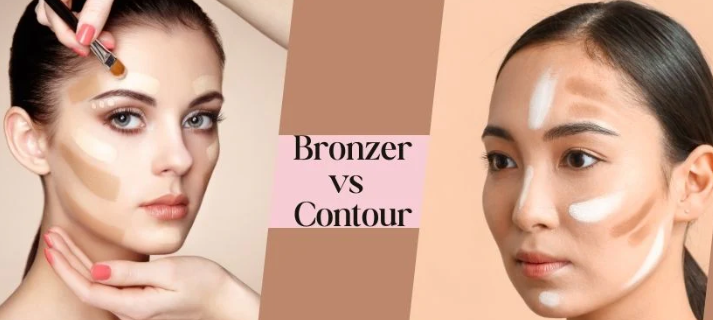
Placement That Defines vs Warms Contour mimics shadows to create the illusion of different bone structure. Shadows are cool-toned and recede. Therefore, contour goes in places where shadows naturally fall: under the cheekbones, along the jawline, on the sides of the nose, and at the temples. Contour placement is precise and follows the hollows of the face. Bronzer mimics a sun tan to add warmth and color. Tans are warm-toned and bring features forward. Bronzer goes where the sun naturally hits: the tops of cheekbones, across the nose bridge, on the forehead near the hairline, and on the chin. Bronzer placement is broader and diffused. Using contour in bronzer placement makes the face look dirty because cool shadows on high points of the face look unnatural. Using bronzer in contour placement makes the face look rounder because warmth brings features forward instead of pushing them back. No single product does both jobs well for most skin tones. Products marketed as bronzer and contour are usually one or the other. Signs of correct contour placement include cheekbones that look more defined without visible product lines. Signs of correct bronzer placement include a healthy glow that looks like spending 15 minutes in the sun.
Undertone and Shade Selection Contour must be cool-toned to look like a shadow. Gray, taupe, or ashy brown shades work best. Contour that looks orange or red on the skin fails because real shadows are never orange. For fair skin, very light gray-taupe works. For medium skin, neutral-cool brown. For dark skin, deep cool brown that is several shades darker than the skin tone. Bronzer must be warm-toned to look like a tan. Golden, peach, or terracotta shades work best. Bronzer that looks gray or ashy fails because real tans are never gray. For fair skin, light peach or soft gold. For medium skin, golden bronze or warm caramel. For dark skin, rich copper or deep amber. Testing contour and bronzer on the jawline in natural light reveals the undertone. If the product disappears into the skin, it is too similar to the skin tone. If it looks orange or red, it is bronzer, not contour. If it looks gray or muddy, it may be contour but too dark or light for the skin tone. No product works for every skin tone. What works for fair skin looks ashy on dark skin. What works for dark skin looks like dirt on fair skin. Signs of correct shade include contour that looks like a shadow (visible but not obvious) and bronzer that looks like a glow (adds color without looking separate from the skin).
Formulas for Different Skin Types Powder contour and bronzer work best for oily skin because powders absorb oil and last longer without fading. Applying powder with a small, dense brush for contour and a large, fluffy brush for bronzer allows precise placement. Cream contour and bronzer work best for dry or mature skin because creams do not emphasize texture or dry patches. Creams also blend more seamlessly, creating a more natural look. Applying cream with a damp sponge or stippling brush prevents streaks. For combination skin, using cream bronzer on the cheeks where skin is drier and powder contour on the forehead where skin is oilier works well. Setting cream products with a matching powder product extends wear for all skin types. No formula is better than the other. The best formula is the one that suits the skin type and application preference. Signs of correct formula choice include powder that does not look cakey or dry, and cream that does not slide off or fade within two hours. For those new to contour and bronzer, starting with powder is easier because powder forgives mistakes more than cream, which sets quickly and is harder to blend out once dried.