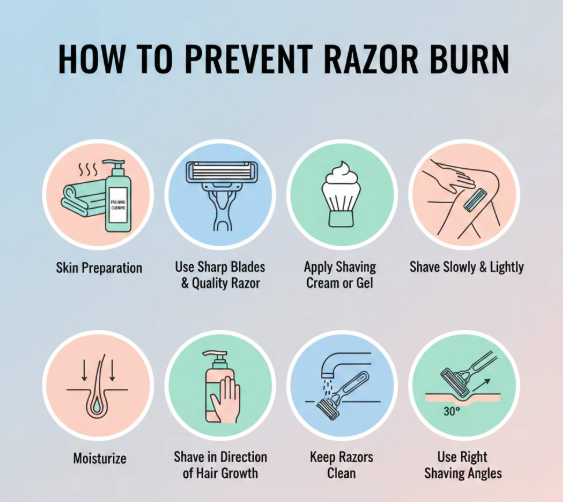
Direction Matters More Than Blade Count Shaving against hair growth cuts hair below skin level, creating a sharp tip that curls back into the follicle as it grows. This causes pseudofolliculitis barbae, known as razor bumps. Shaving in the direction of hair growth, even with a single-blade razor, produces a blunt tip that grows straight out of the follicle without re-entering the skin. Testing growth direction by running a hand over the area reveals which way hair lies. On legs, hair often grows downward, but on the bikini line or neck, hair may grow in multiple directions. Using short, light strokes with minimal pressure reduces the chance of cutting hair too short. Stretching skin tight during shaving increases the risk of cutting hair below the surface. Keeping skin relaxed but wet with warm water and shaving cream provides the safest environment. No razor completely prevents razor bumps for those with curly or coarse hair because the hair naturally curls as it grows. For these hair types, single-blade razors or electric trimmers that leave a tiny stubble produce fewer bumps than multi-blade razors. Shaving less frequently, every three to seven days, gives hair time to emerge fully.
Pre Shave Preparation That Softens Hair Hair becomes softer and easier to cut after exposure to warm water and gentle cleansers for at least three minutes. Shaving dry or with only water leaves hair stiff, causing the razor to tug and cut unevenly. The ideal preparation involves washing the area with a gentle, glycerin-based cleanser, then applying a warm, damp cloth for three minutes. Exfoliating with a chemical exfoliant like salicylic or glycolic acid the night before, not immediately before shaving, lifts ingrown hairs and removes dead skin cells without causing razor burn. Using shaving cream or gel with lubricating ingredients like aloe, glycerin, or jojoba oil reduces friction. Applying a thin layer of hair conditioner as a shaving cream alternative works for many because conditioners contain silicones that create slip. No pre-shave oil prevents razor bumps completely, but oils like jojoba or grapeseed applied before shaving cream add extra lubrication. Leaving the shaving cream on the skin for two minutes before the first stroke allows it to soften hair fully. Rinsing the razor after every stroke keeps blades clean and sharp.
Post Shave Treatments That Calm Follicles Razor bumps are an inflammatory response. Calming that inflammation immediately after shaving reduces bump formation. Applying a cool compress for two minutes closes micro-wounds and constricts blood vessels. Using an alcohol-free, fragrance-free toner containing niacinamide or centella asiatica soothes without stinging. Salicylic acid pads designed for post-shave use penetrate follicles and keep them clear as hair regrows. Using these pads once daily starting 24 hours after shaving prevents new bumps. Heavy creams or balms with shea butter or coconut oil trap hair against the skin and worsen bumps. Lightweight gels or lotions work better. For existing razor bumps, applying a 1% hydrocortisone cream for two to three days reduces redness and swelling. Using hydrocortisone for longer than one week thins the skin. No post-shave treatment works if shaving technique remains aggressive. Switching to an electric foil shaver or depilatory cream for one month allows severe bumps to heal completely. After healing, returning to careful wet shaving with proper direction and preparation maintains smooth skin without recurrence.