For someone new to investing, the biggest obstacle is not knowledge. It is psychology. Faced with thousands of stocks, you do not know which one to choose. Faced with daily price fluctuations, you do not know whether to buy or sell. Faced with news headlines screaming “the market is about to crash,” you feel fear. Fund investing bypasses these obstacles. You do not need to pick stocks. The fund has already picked them for you. You do not need to time your purchases. Automatic investing does it for you. You do not need to predict the market. Long-term holding lets you ignore short-term fluctuations.
The essence of a fund is pooled investing. Many people put their money together into a large pool. A fund manager uses this pool to buy a basket of assets, such as stocks, bonds, or real estate. Each investor owns a portion of the fund’s assets proportional to their contribution. When you buy one share of a fund, you simultaneously own a small piece of dozens, hundreds, or even thousands of companies.
This diversification is the biggest advantage of fund investing. If you buy a single stock and that company goes bankrupt, you lose almost all your money. If you buy a fund that holds five hundred stocks and one of those companies goes bankrupt, the impact on your overall portfolio is tiny. Diversification will not make you the most profitable investor. But it will ensure that you are not the biggest loser.
The first step in fund investing is clarifying your goal. What are you saving this money for? Is it for retirement twenty years from now, or for a house down payment five years from now? Different goals call for different types of funds. Long-term goals can tolerate more risk because you have time to wait for markets to recover. Short-term goals need to be more conservative because you cannot afford to have the market be at a low point exactly when you need the money.
The second step is understanding the different types of funds. Stock funds primarily invest in company stocks. They have the highest long-term returns but also the highest volatility. Bond funds primarily invest in government or corporate bonds. They have lower returns but lower volatility. Balanced funds hold both stocks and bonds, with risk and return somewhere in between. Index funds are a special type of stock or bond fund. They do not try to pick winners. They simply复制 the entire market. Index funds typically have the lowest fees.
The third step is choosing a fund that fits you. If you are a beginner, starting with a broad market index fund is the safest choice. Examples include funds that track the entire stock market or funds that track the S&P 500. These funds have low fees, broad diversification, and solid long-term performance. You do not need to research industry trends. You do not need to analyze company fundamentals. You just need to invest regularly.
The fourth step is building the habit of regular investing. Regular investing means investing a fixed amount of money on a fixed day each month. When the market is up, your fixed amount buys fewer shares. When the market is down, your fixed amount buys more shares. Over time, your average purchase price evens out. Regular investing removes the anxiety of “when to get in,” because you are always getting in.
The fifth step is holding steady. The biggest enemy of fund investing is yourself. People get excited and buy when the market is rising. They panic and sell when the market is falling. Both behaviors are wrong. Buying when the market is rising means you are buying at high prices. Selling when the market is falling turns a paper loss into a real loss. The correct approach is to keep investing regularly and keep holding, regardless of whether the market is up or down. Only when you are getting close to your goal should you consider selling.
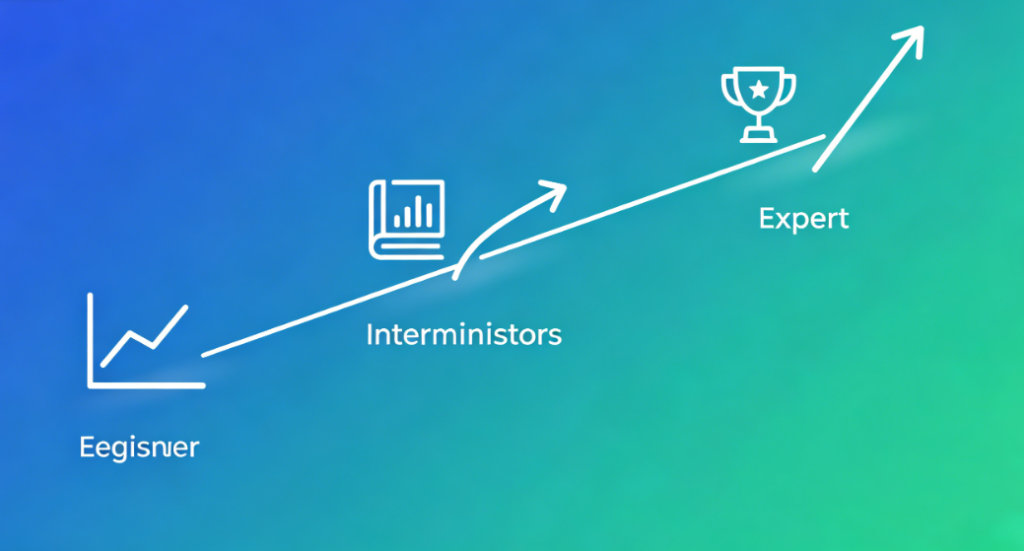
The transition from beginner to expert is not about accumulating more knowledge. It is about changing your behavior. Beginners try to predict the market. Experts accept that the market is unpredictable. Beginners trade frequently. Experts hold for the long term. Beginners chase hot funds. Experts stick with low-cost index funds. Beginners panic when markets drop. Experts keep buying when markets drop.
Fund investing will not make you rich overnight. It will make you rich slowly. But the benefit of getting rich slowly is that this kind of wealth stays. People who get rich overnight often lose it overnight. People who accumulate slowly through regular fund investing see their wealth grow along with their discipline.
You do not need a lot of money to start fund investing. Many funds have minimum investments of one hundred dollars or even less. What matters is starting, not how much you start with. One hundred dollars a month, invested for thirty years, becomes a significant sum through compounding. One thousand dollars a month, invested for thirty years, can become a pillar of your retirement life.
Do not wait until you “have more money to start.” Waiting is the most expensive cost in investing. Start today. Open an account. Pick a broad market index fund. Set up automatic monthly contributions. Then forget about it and go live the rest of your life. Ten years from now, you will thank yourself.