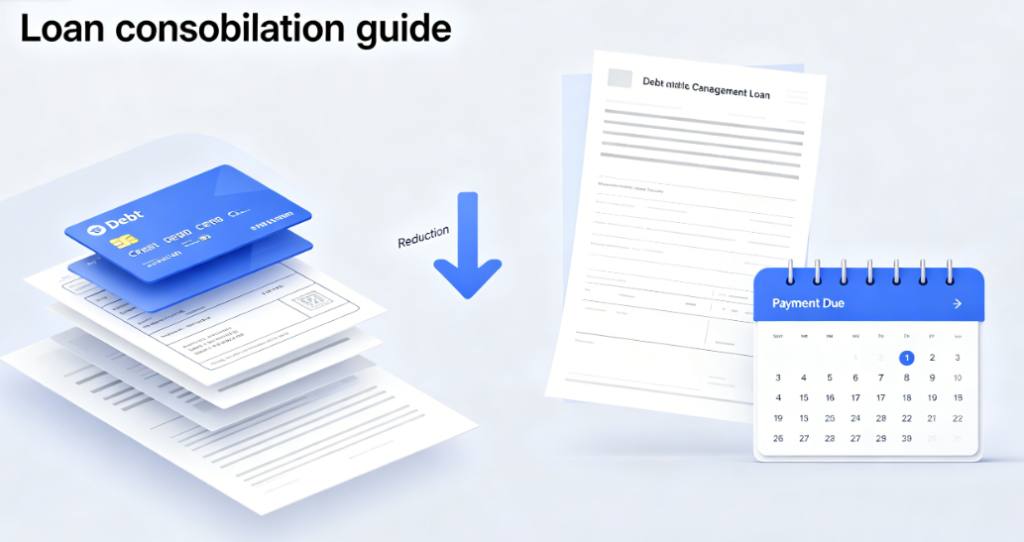
It sounds wonderful. In the right situation, loan consolidation can indeed help you save money, simplify your finances, and get out of debt faster. But in the wrong situation, it can leave you in a deeper hole. The key is understanding who consolidation helps and who it hurts.
The biggest benefit of consolidation is simplicity. When you have only one loan to repay instead of five or six, your financial life becomes much simpler. You are far less likely to forget a payment. You do not need to switch between multiple apps. You do not need to calculate the minimum payment for each card. One account, one transfer, done.
Another benefit is the potential to lower your interest rate. If your old debts are mostly credit cards, their interest rates are probably high. If you can get a consolidation loan with a significantly lower rate, you will pay less interest each month. The money you save on interest can be used to pay down principal faster or improve your cash flow.
Consolidation can also improve your credit score. Credit scores consider multiple factors, including credit utilization and payment history. When you pay off your credit cards with a consolidation loan, those card balances go to zero. Your credit utilization drops, which typically raises your credit score. At the same time, you have only one due date, making it harder to miss a payment, which helps maintain a good payment history.
But consolidation also has clear risks and drawbacks. The biggest risk is using your credit cards again after consolidation. This is the most common and most dangerous mistake. The consolidation loan paid off your credit card balances. Your credit limits are now free again. If you start using those credit cards again, you will soon owe the consolidation loan plus new credit card debt. Your total debt has not decreased. It has increased.
Another risk is that the consolidation loan’s costs might be higher than the numbers suggest. Some consolidation loans charge application fees, monthly service fees, or prepayment penalties. These fees can cancel out any interest savings. Some consolidation loans have variable interest rates. If rates rise, your monthly payment rises. Some consolidation loans extend the repayment term. Your monthly payment is indeed lower, but you will be paying for many more years, and total interest might be higher.
Consolidation is also not for everyone. If your total debt is small, the hassle of consolidation might not be worth it. If your credit score is low, you will not qualify for a low-rate consolidation loan, and consolidation might actually increase your interest costs. If your income is unstable, the fixed monthly payment of a consolidation loan might be harder to manage than your current debts. If you have not solved the root problem causing your debt, such as overspending or lack of a budget, consolidation is just a temporary relief, not a real solution.
So how do you decide whether debt consolidation is right for you? First, calculate the average interest rate across all your current debts. Then research the interest rate on consolidation loans. Only if the consolidation rate is significantly lower than your current average rate does consolidation make financial sense. Second, check the fees on the consolidation loan. Add all fees into your calculation of the true total cost. Third, honestly assess your spending habits. If you are still overspending, fix that problem first before considering consolidation.
Debt consolidation is a tool. Whether it helps or hurts depends on how you use it. Used correctly, it simplifies your debt, lowers your interest, and helps you pay off faster. Used incorrectly, it gives you the illusion that your problem is solved while your debt quietly grows.