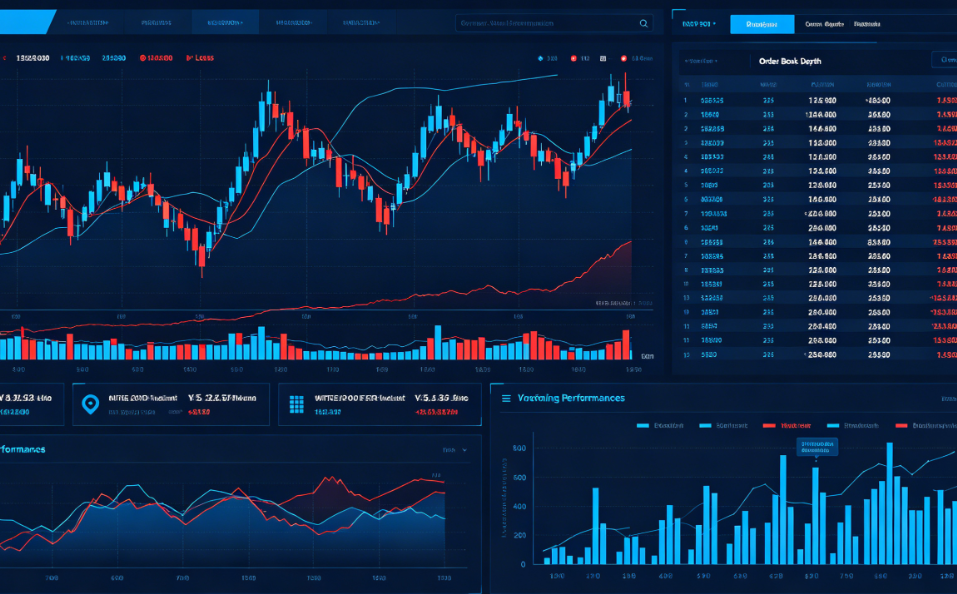
The core of a trading simulator is understanding price fluctuations. In the game, the prices of certain virtual items change over time. They may rise or fall due to updates, events, or changes in player demand. You need to decide when to buy and when to sell. If you buy at a low price and sell at a high price, you earn game currency. If you do the opposite, you lose.
This logic is the same as in real markets. In real markets, the prices of stocks, commodities, and currencies are also driven by supply and demand, news events, and investor sentiment. A trading simulator provides a low-pressure environment for practicing the skill of identifying these patterns without risking real money.
In the Blox Fruits trading simulator, the first skill you need is observation. Do not start trading as soon as you enter the game. Spend time watching how prices move. Which items have large price swings? Which items have relatively stable prices? Are there patterns to the price movements? For example, are certain items more expensive on weekends and cheaper on weekdays? Observation is the foundation of trading, whether in a game or in real markets.
The second skill is patience. Many people rush to sell when prices rise a little, or panic sell when prices drop a little. In a trading simulator, you need to learn to wait. Wait for the right price to appear. Wait for the market to prove that your judgment is correct. Impulsive trading is one of the main causes of losses.
The third skill is risk management. Even in a game, do not put all your game currency into a single trade. Diversify your “investments.” If one trade loses money, you have other “positions” to make up for it. This principle is even more important in real trading. Never trade with money you cannot afford to lose.
The fourth skill is understanding news and updates. In Blox Fruits, game updates change the rarity or functionality of certain items. Players who know about upcoming updates in advance can position themselves before the news becomes public. This is similar to how real traders pay attention to company earnings reports, economic data, and policy news. Information advantage is an important part of trading, though insider trading is illegal. In a game, using publicly available update information is perfectly reasonable.
The fifth skill is recording and reviewing. After each trade, record the price you bought at, the price you sold at, how long you held, and your profit or loss. Regularly review these records to see which decisions were right and which were wrong. Learning from mistakes is the fastest way to improve.
To be clear, the Blox Fruits trading simulator is a game. It uses game currency, not real money. Its price movements are driven by game mechanics, not real economic forces. Success in the simulator does not guarantee success in real markets. Real markets are far more complex and far more risky.
But the simulator can provide value. It lets you experience the emotional swings of trading without financial risk. You will feel the excitement of rising prices, the anxiety of falling prices, and the regret of missed opportunities. These emotions are magnified many times in real trading. Experiencing them in a simulator and learning to control them can be helpful if you ever engage in real trading.
If you are interested in trading, a game simulator is a decent starting point. But it is not the endpoint. Real learning requires reading books, studying markets, and understanding the fundamentals of economics and finance. A game can get you started. But do not stay in the game.