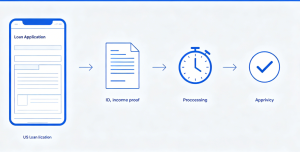
The basic way a car loan works is this: you borrow money from a bank, credit union, or auto finance company to buy a car. You promise to make monthly payments over a set period of time. Each monthly payment has two parts: one part pays back the principal you borrowed, and the other part pays interest. Interest is the fee the lender charges for lending you the money. The car itself serves as collateral for the loan. If you stop paying, the lender has the right to take the car and sell it to recover the debt.
The most important factor determining the cost of your car loan is the interest rate. A higher interest rate means you pay more for borrowing. A lower interest rate means borrowing is cheaper. Your credit score is the most critical factor in determining your interest rate. People with high credit scores are seen as reliable borrowers, so lenders offer them lower rates. People with low credit scores are seen as higher risk, so their rates are higher. This is why checking and improving your credit score before applying for a car loan is so important.
Beyond the interest rate, the loan term is another key number. The loan term is how long you have to pay off the loan. Common car loan terms are three years, four years, five years, six years, and even seven years. Shorter terms mean higher monthly payments, but you pay less total interest. Longer terms mean lower monthly payments, but you pay more total interest. This is a direct trade-off.
The first mistake many people make with car loans is focusing only on the monthly payment. Car dealers ask you: “what monthly payment works for you?” Then they extend the loan term to make your monthly payment hit that number. They do not tell you that a longer term means more interest. A car that could have been paid off in three years is stretched to six years. Your monthly payment is indeed lower, but you pay interest for several more years, and the total amount is higher.
The correct approach is to first determine the interest rate and term you can accept, and then the monthly payment will follow. Do not work backward from the monthly payment. Start from the rate and term, and calculate the total cost. Compare offers from different lenders. Do not accept only the loan the dealer recommends. Ask your own bank or credit union first. They may offer a lower rate.
Another common mistake is borrowing for more car than you can afford. The bank may approve you for a significant amount. That does not mean you should borrow that much. The monthly payment is only part of the cost of owning a car. You also need to pay insurance, fuel, maintenance, repairs, parking, and tolls. These costs together can be as much as the monthly payment, or even more. Add all of these into your monthly budget before deciding how much to borrow.
If you have no credit history or a very low credit score, traditional banks may reject your car loan application. In this situation, you have several options. One is to find a family member or friend with good credit to co-sign. A co-signer promises to pay if you do not. This lowers the bank’s risk, but increases the co-signer’s risk. Another option is to try a credit union. Credit unions are non-profit and are sometimes more flexible than banks. A third option is to buy a cheaper car with cash or a small loan. Build or repair your credit at the same time. After a year or two, when your credit improves, upgrade to a better car.
One easily overlooked detail with car loans is whether there is a prepayment penalty. Some loan contracts require you to pay a fee if you pay off the loan early. This sounds unreasonable, but it exists. Before signing the contract, confirm whether you can pay off the loan early without penalty. If yes, then if your financial situation improves in the future, you can pay off early and save on interest.
A car loan is not a bad thing. It is a tool that helps you obtain transportation. Used correctly, you get a car sooner and build credit at the same time. Used incorrectly, you can end up with heavy debt, lose the car, and damage your credit. The key points are: understand the relationship between interest rate and term, focus on total cost rather than the monthly payment, buy a car you can truly afford, and never miss a payment.