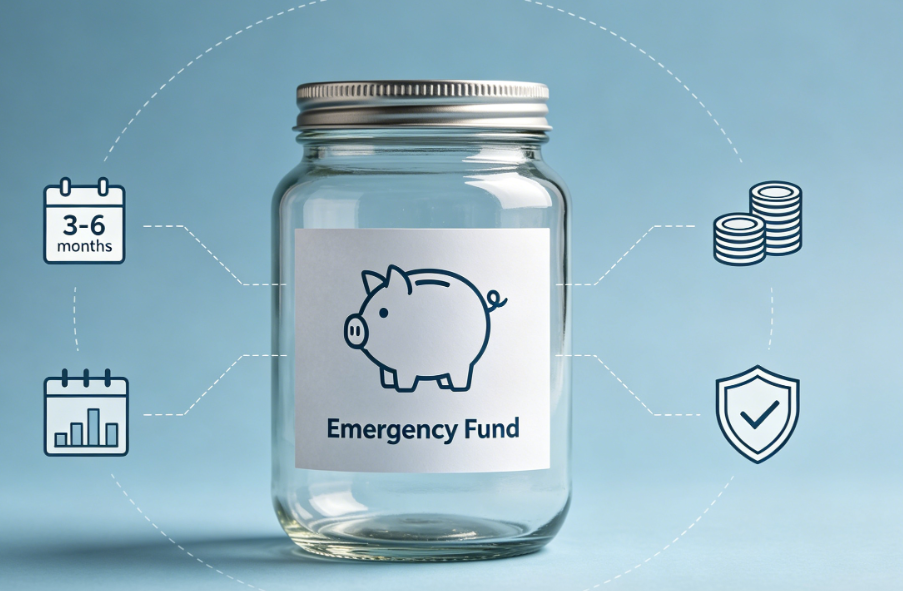
People without an emergency fund have only bad options when facing unexpected expenses. They may borrow on high-interest credit cards. They may borrow from family, straining relationships. They may withdraw early from retirement accounts, incurring penalties and taxes. They may miss bills, damaging their credit score. All of these options are bad. An emergency fund exists so you do not need to choose any of them.
How large should an emergency fund be? This is a common question. Most financial experts recommend three to six months of basic living expenses. This number is not arbitrary. Three months of savings can cover most short-term job losses. Six months of savings can cover a longer unemployment period or a more serious crisis. If you have a stable job, such as a government employee or healthcare worker, three months may be enough. If your job is unstable, such as a contractor or self-employed person, six months or even twelve months is more appropriate.
To calculate how much you need, first list your basic monthly expenses. Include rent or mortgage, utilities, insurance, basic food, transportation, and minimum debt payments. Do not include dining out, travel, entertainment, or shopping. These are expenses you can cut during hard times. Multiply your total monthly expenses by the number of months you want to cover. That is your target amount.
For many people, this target number may look intimidating. Three to six months of living expenses can be a significant sum. But you do not need to save it overnight. An emergency fund is built slowly.
The first step in starting an emergency fund is setting a small goal. Do not aim for six months right away. First, save one thousand dollars. One thousand dollars can cover most small emergencies, such as a car repair, an urgent care visit, or a last-minute flight home. With that one thousand dollars, you already have a basic layer of protection.
The second step is opening a separate savings account. Keep your emergency fund separate from your everyday checking account. If the money is mixed together, you might accidentally spend it. A separate account makes it clear that this money is still there. Choose a high-yield savings account so your emergency fund earns some interest as well.
The third step is automating your savings. Set up a monthly automatic transfer from your checking account to your emergency savings account. The amount does not need to be large. Fifty dollars or one hundred dollars per month is fine. What matters is consistency. Automatic transfer means you do not need to make a decision each time. The money is saved before you know it.
The fourth step is depositing windfalls into the fund. Tax refunds, bonuses, overtime pay, gifts, and proceeds from selling things can all go directly into your emergency fund. This money is not part of your regular budget, so you will not miss it.
The fifth step is redefining what counts as an emergency. Your emergency fund is not for buying a new phone. It is not for a vacation. It is not for a discounted television. It is only for true emergencies. What is a true emergency? If you do not spend the money, you will lose housing, lose the ability to work, or harm your health. That is an emergency. Before tapping your emergency fund, ask yourself: is there another way to handle this problem? If the answer is yes, do not use the fund.
After you have saved enough, do not stop there. As your income increases or your family structure changes, your basic expenses also change. Reassess your emergency fund target once a year. If your rent goes up, or if you have a child, you may need to increase the size of your emergency fund.
Finally, an emergency fund is not an investment. Do not put it in the stock market. Do not buy cryptocurrency. Do not buy long-term bonds. An emergency fund needs safety and liquidity. You need to be able to access the money the moment you need it. High-yield savings accounts and money market funds are the best places for it.
An emergency fund will not make you rich. But it will prevent you from becoming poor. It is not the most exciting financial topic, but it is the most important. Before you start investing, buying a house, or making any other financial plans, build your emergency fund. It is the bottom line of your financial life.