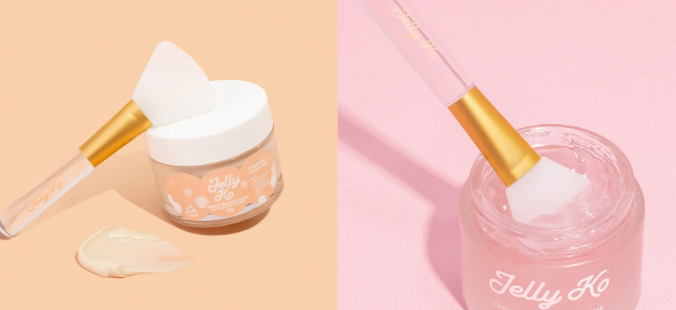
Texture and Occlusion Levels Night creams are emulsions of water, oil, and humectants. Their texture ranges from lightweight lotions to rich balms. Night creams provide hydration and deliver active ingredients like retinol, peptides, or ceramides. They absorb partially into the skin, leaving some emollients on the surface. Sleeping masks, also called overnight masks or pack masks, are occlusive gels or creams designed to sit on top of the skin. They create a semi-permeable film that traps everything underneath. This film prevents transepidermal water loss for 6 to 8 hours, forcing ingredients to absorb fully. Sleeping masks typically contain higher concentrations of film-forming ingredients like dimethicone, carbomer, or agar. They do not absorb completely. In the morning, rinsing removes the remaining film. Using a sleeping mask every night can cause buildup and breakouts because the skin needs to breathe and shed dead cells. Night creams can be used nightly because they allow normal skin functions. No product hydrates better than the other. Sleeping masks lock in whatever was applied underneath; if nothing hydrating was applied, the mask only traps dryness. Signs of correct texture choice include night creams that leave skin feeling soft but not sticky in the morning, and sleeping masks that rinse off easily without leaving residue.
Active Ingredients and Penetration The same active ingredient works differently in a night cream versus a sleeping mask. In a night cream, the active ingredient absorbs into the skin over 30 to 60 minutes, with some percentage remaining on the surface. In a sleeping mask, the active ingredient is trapped against the skin all night, forcing deeper and more complete absorption. This increased penetration boosts effectiveness but also increases irritation risk. A retinol night cream used nightly may cause mild flaking. The same concentration of retinol in a sleeping mask used nightly may cause severe peeling and redness. Therefore, sleeping masks should contain lower concentrations of potent actives than night creams. For soothing ingredients like ceramides, niacinamide, or centella asiatica, the increased penetration from a sleeping mask is beneficial without irritation risk. For exfoliating or cell-communicating ingredients like retinol, AHAs, or BHAs, sleeping masks should be used less frequently, perhaps twice weekly instead of nightly. No sleeping mask makes a poor night cream work better. Garbage in, garbage out. If the serum or moisturizer underneath is ineffective, the mask only traps ineffectiveness. Signs of correct active ingredient pairing include night creams that show gradual improvement over weeks, and sleeping masks that provide a visible boost the morning after use without irritation.
Layering Order for Maximum Benefit The order of application determines whether a sleeping mask helps or hurts. Correct order: cleanse, apply any water-based serums (hyaluronic acid, niacinamide, vitamin C), apply night cream, wait 3 to 5 minutes for night cream to absorb, then apply a thin layer of sleeping mask. The sleeping mask goes last because its film must be the outermost layer. Applying anything over a sleeping mask disrupts the film and reduces its effectiveness. Using both a night cream and a sleeping mask every night is too heavy for most skin types, especially oily or combination skin. Alternating nights: night cream alone on most nights, sleeping mask one to two nights per week for an extra hydration boost. For very dry or mature skin, using both together on the same night, but only two to three nights per week, provides intense treatment without clogging. Using a sleeping mask without any moisturizer underneath leaves the skin dry because the mask only traps what is already there. No sleeping mask should feel tight or drying after application. If it does, the film is too strong or the skin underneath was not adequately hydrated. Signs of correct layering include waking up with plump, soft skin that does not feel greasy or sticky, and no new breakouts after two weeks of the routine.