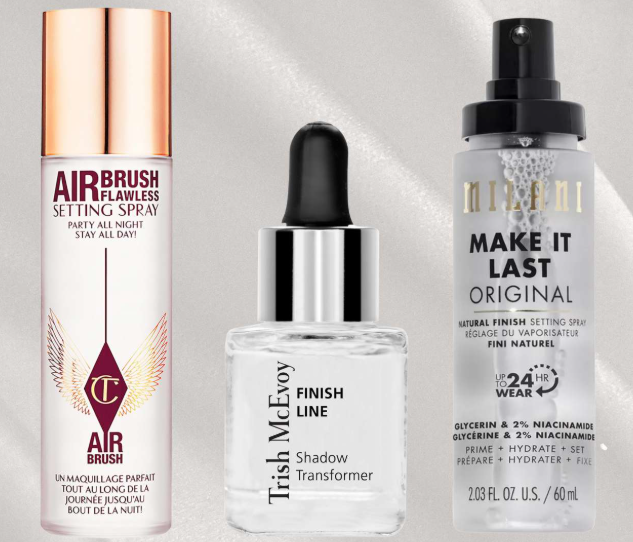
Film Formers vs Hydrating Sprays Setting sprays fall into two categories: film-forming and hydrating. Film-forming sprays contain polymers like PVP, VP/VA copolymer, or acrylates that create a thin, flexible layer over makeup. This layer resists oil, sweat, and friction, keeping makeup in place for 8 to 12 hours. Film-forming sprays work best for oily skin, long days, or special events. Hydrating sprays contain water, glycerin, and sometimes aloe or rose water. They melt powder layers together and take away the cakey look, but they do not significantly extend wear. Hydrating sprays add 1 to 2 hours of longevity at most. Many products labeled as setting sprays are actually hydrating sprays. Checking the ingredient list for film-forming polymers reveals the truth. If no polymers are present, the spray is a finishing or hydrating spray, not a true setting spray. Using a hydrating spray over a film-forming spray provides both longevity and a natural finish. No spray makes makeup completely waterproof, transfer-proof, or smudge-proof. Even the strongest film-forming sprays break down with heavy sweating, rubbing, or oil production. Signs of a true setting spray include makeup that looks freshly applied after 8 hours and does not transfer onto phone screens or clothing collars.
Application Distance and Layering Setting spray effectiveness depends heavily on application technique. Holding the bottle 8 to 10 inches from the face allows the mist to settle evenly without creating large droplets that disturb makeup. Holding closer than 6 inches blasts makeup, causing it to shift or pool in lines. Spraying in an X and T motion (across the forehead and nose, then diagonally across each cheek) ensures even coverage without over-spraying any one area. Two to four spritzes total is sufficient. More spray does not mean more hold; over-spraying makes the face wet, causing makeup to slide off. Applying setting spray in layers extends wear further. One layer after foundation and concealer, another layer after powder, and a final layer after all other makeup creates a sealed sandwich effect. Allowing 30 seconds of drying time between layers prevents the wetness from disturbing previous layers. Using setting spray to dampen a beauty sponge and then pressing it into the skin after all makeup is applied pushes the film former into every crevice for maximum hold. No application technique works if the setting spray lacks film-forming ingredients. Signs of correct application include a face that feels dry to the touch within 60 seconds and makeup that does not transfer when lightly pressed with a finger.
Ingredients to Avoid for Sensitive Skin Setting sprays contain preservatives, alcohols, and fragrances that cause reactions in sensitive skin. Denatured alcohol (alcohol denat) is common in film-forming sprays because it evaporates quickly, leaving the polymer behind. Alcohol strips the skin barrier and causes stinging, redness, and dryness. Those with dry or sensitive skin should avoid alcohol-heavy formulas. Fragrance, both synthetic and natural, triggers contact dermatitis in up to 30% of sensitive individuals. Essential oils like lavender, citrus, and eucalyptus are particularly irritating when trapped under a film-forming layer. Preservatives like phenoxyethanol, methylisothiazolinone, and formaldehyde-releasers cause allergic reactions in some people. Patch testing a new setting spray on the inner arm for five days before full-face use identifies reactions. For sensitive skin, looking for alcohol-free, fragrance-free, and essential-oil-free formulas reduces risk. No setting spray is completely hypoallergenic, but brands that market to sensitive skin often use gentler preservative systems. Signs of a reaction include burning upon application, redness that spreads beyond the spray area, or small bumps appearing within 24 hours. Stopping use and switching to a powder-based setting method resolves reactions.