Hip‑hop was born in the South Bronx, a neighborhood suffering from disinvestment and arson. Youth created their own culture from limited resources. DJ Kool Herc’s parties in recreation centers attracted breakers (dancers), MCs (rappers), and graffiti writers. The same youth who tagged walls also carried boom boxes and wore Adidas.
Graffiti provided visual identity for hip‑hop. Album covers (e.g., Wild Style soundtrack, Beat Street) featured graffiti lettering. Early rap videos included scenes of subway cars covered in pieces. Writers would paint backdrops for hip‑hop events.
Key figures bridged both worlds: Fab 5 Freddy (Fred Brathwaite) painted trains and later directed music videos for artists like Blondie and the Beastie Boys. He hosted “Yo! MTV Raps” and brought street art to mainstream TV. Phase 2 designed the “Wild Style” logo. Dondi’s art influenced album art for the Soul Sonic Force.
Lyrics often referenced graffiti. “Rapper’s Delight” (1979) includes the line “I like the beat and I’m a‑taggin’ along.” More explicitly, songs like “The Message” (Grandmaster Flash) and “Gangsta’s Paradise” (Coolio) alluded to street life that included writing.
Graffiti crews functioned like rap crews. The Fabulous 5 (Fab 5), the Rock Steady Crew (though primarily breakers, they included writers), and the United Graffiti Artists were groups that collaborated and competed. The concept of “getting up” (visibility) paralleled “making it” in hip‑hop.
The 1980s saw mainstreaming. Films like Wild Style (1982) and Beat Street (1984) featured real graffiti writers as themselves. These movies spread hip‑hop globally. European and Japanese youth saw these films and started their own graffiti scenes.
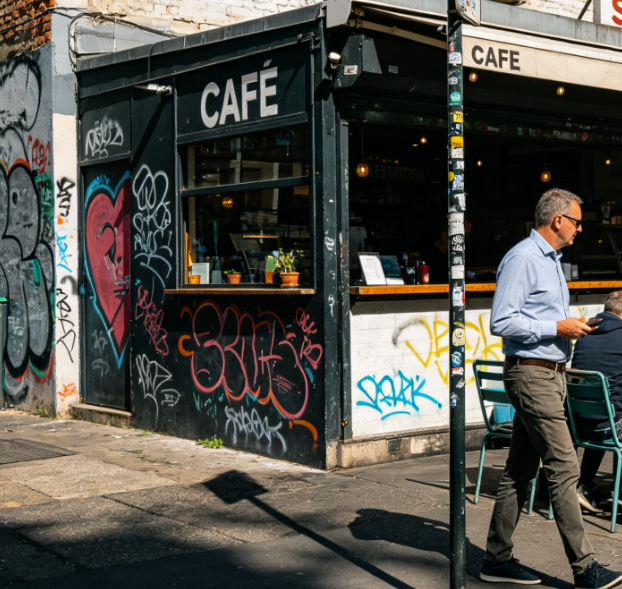
However, tensions existed. As hip‑hop became commercialized, graffiti remained more underground. Some rappers distanced themselves from “vandalism.” Yet the connection persisted. In the 1990s and 2000s, artists like Jay‑Z, Eminem, and Kanye West used graffiti aesthetics in music videos and stage design. Murals of deceased rappers (Tupac, Biggie, Nipsey Hussle) are common in neighborhoods.
Today, hip‑hop and graffiti are global cultures with independent trajectories but shared roots. Graffiti writers still listen to boom‑bap beats while painting; hip‑hop festivals often include live painting installations. The fourth element remains essential – a visual art that speaks the same language of style, competition, and self‑assertion.