The Case Against Graffiti:
Property rights – Owners have the right to control their property. Unauthorized painting is a violation, regardless of aesthetic quality. It imposes cleanup costs and reduces property values.
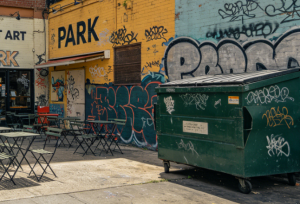
Public cost – Cities spend millions annually on graffiti removal. Taxpayers fund this. Some argue that even “beautiful” graffiti sets a precedent for more tagging.
Safety – Graffiti can signal neglect, attracting crime. The “broken windows” theory suggests that visible disorder encourages further anti‑social behavior.
Respect – Painting over someone else’s art (even a tag) is disrespectful. The graffiti scene itself has rules against “biting” (copying) and “capping” (painting over without permission), showing that even writers recognize ownership.
The Case For Graffiti:
Free speech – Graffiti is a form of expression. For marginalized communities, it may be the only accessible medium. Public spaces can host multiple voices.
Aesthetic value – Many murals are culturally enriching. Cities like Melbourne and Berlin attract tourists because of street art. Graffiti can transform bland walls into landmarks.
Social commentary – Graffiti often critiques power, inequality, and injustice. Banksy’s works, for example, challenge war and consumerism. Suppressing such speech is authoritarian.
Economic benefit – Legal murals can increase foot traffic and business. Property owners sometimes commission artists. Graffiti festivals generate revenue.
Middle Paths:
Legal walls – Cities designate spaces where graffiti is permitted. This channels creativity away from private property.
Graffiti festivals – Events like “Meeting of Styles” bring writers together for legal painting. They foster community and skill development.
Mural programs – City‑commissioned murals on public buildings. Artists submit proposals; winners are paid.
Education – Teaching youth about legal alternatives and art careers. Some juvenile diversion programs offer graffiti workshops.
Digital graffiti – Projecting art onto buildings without physical paint avoids property damage.
Case Study: 5Pointz – The Queens complex became a Mecca for graffiti, with artists painting its walls for decades. Despite being illegal, the owner tolerated it. When he decided to redevelop and whitewashed the murals, artists sued. The court awarded $6.7 million under VARA. This ruling suggests that under certain conditions, graffiti can gain legal protection.
Ultimately, ethics are contextual. A tag on a historic church is hard to defend; a mural on a neglected railway viaduct may be a gift. The best solutions involve negotiation, designated spaces, and respect for both artists and owners.