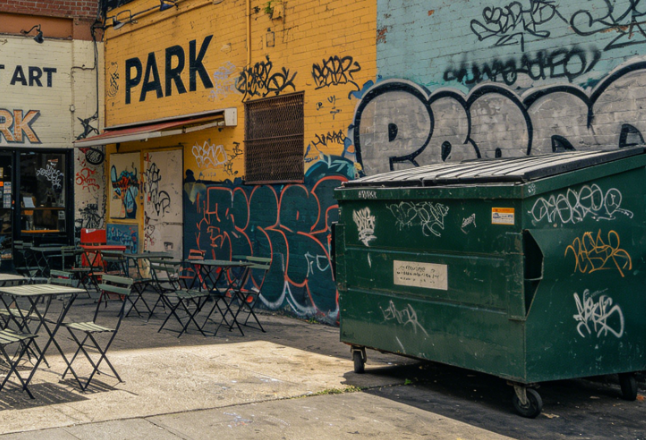
Most jurisdictions define graffiti as vandalism when done without permission. Penalties include fines, community service, and jail time. New York City, during the 1980s subway crackdown, passed laws banning the sale of spray paint to minors and requiring stores to lock up paint. Similar laws exist in many cities.
Yet the artistic value of graffiti is increasingly recognized. The case of Cohen v. California (1971) dealt with a jacket reading “F*** the Draft” – not graffiti, but established that offensive expression is protected speech. However, property rights often trump free speech. The Supreme Court has held that governments can prohibit defacement of public property without violating the First Amendment.
In 2017, a group of artists sued to stop the destruction of the 5Pointz complex in Queens, New York – a former factory covered in murals. The artists claimed the murals were protected under the Visual Artists Rights Act (VARA), which gives artists the right to prevent destruction of works of “recognized stature.” The court agreed, awarding $6.7 million in damages. This landmark decision affirmed that graffiti can be art, legally.
Cities have responded with legal walls – designated areas where graffiti is permitted. Examples include the “Halls of Fame” in the Bronx, the “East Side Gallery” in Berlin (a remaining segment of the Berlin Wall), and the “Street Art Museum” in Amsterdam. Some cities, like Bristol and São Paulo, have embraced graffiti as a tourist attraction.
Conversely, other cities have cracked down. In 2006, Philadelphia passed laws requiring property owners to remove graffiti within 48 hours. São Paulo’s “Clean City Law” (2006) banned all outdoor advertising, but also inadvertently reduced graffiti – though pichação (a local style) persisted.
Businesses have also appropriated graffiti. Brands pay street artists to create murals for advertising campaigns. This blurs the line between rebellion and commerce. Some artists reject corporate commissions; others see them as legitimate income.
The debate continues. For every Banksy print sold at auction, there is a teenager arrested for tagging a train. The legal system struggles to distinguish between malicious defacement and cultural enrichment. Perhaps the solution is not a single rule, but context – a thoughtful graffiti piece on a neglected wall may be celebrated; a crude tag on a historic building is rightly condemned.