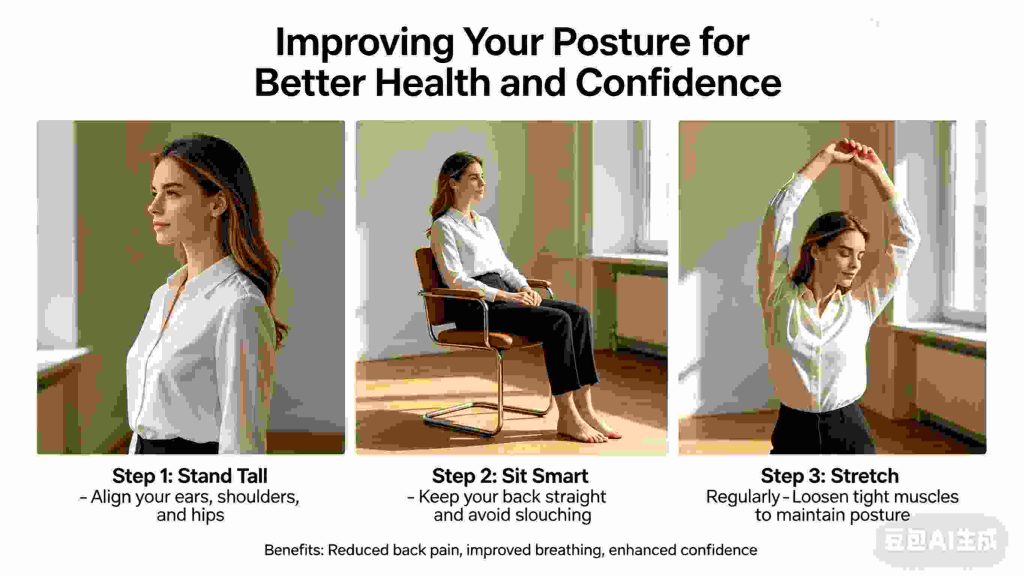
Poor posture can lead to muscle imbalances and chronic pain. Sitting for long periods often causes the shoulders to round and the spine to curve unnaturally.
Strengthening core muscles is essential for maintaining good posture. A strong core supports the spine and helps keep the body aligned.
Stretching tight muscles is equally important. Muscles in the chest and hips often become tight due to prolonged sitting, pulling the body out of alignment.
Ergonomic adjustments can improve posture. Adjusting chair height, screen position, and workspace setup helps reduce strain on the body.
Regular movement throughout the day prevents stiffness. Taking breaks to stand, stretch, and walk helps maintain proper alignment.
Mindfulness plays a role in posture. Being aware of body positioning throughout the day helps reinforce good habits.
Improved posture can enhance confidence. Standing and sitting upright can positively influence how individuals feel and are perceived by others.
Ultimately, posture improvement requires consistent effort. Small adjustments made daily can lead to significant long-term benefits.