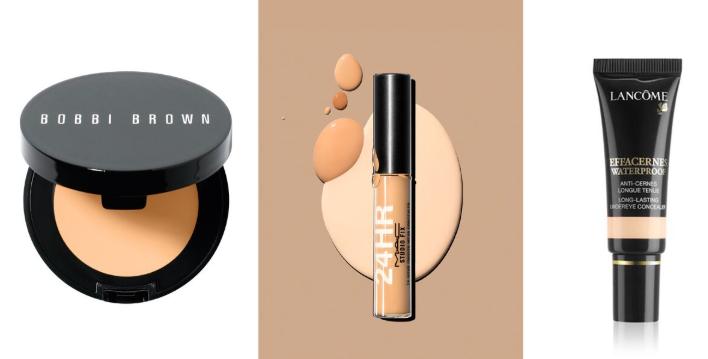
Color Correcting Before Concealer Dark circles come in different colors, and concealer alone may not cancel them completely. Purple or blue dark circles, common in fair to medium skin, cancel with peach or orange corrector. Brown dark circles, more common in medium to dark skin, cancel with orange or red corrector. Green or yellow dark circles, often from visible veins, cancel with pink or salmon corrector. Applying a thin layer of color corrector only to the darkest area, not the entire under-eye, neutralizes the discoloration. Using too much corrector creates a mask-like appearance that concealer cannot cover. After corrector, applying skin-toned concealer on top provides the final coverage. The corrector and concealer together use less total product than concealer alone trying to cancel dark colors. This lighter application reduces creasing. For mild dark circles, skipping corrector and using a full-coverage concealer alone works fine. For severe dark circles, corrector is essential. No corrector or concealer removes dark circles caused by deep tear troughs (hollows under the eyes). These require filler or other medical treatments for actual removal. Signs that color correcting helps include dark circles looking gray or ashy after concealer alone but natural after corrector plus concealer.
Thin Layers and Waiting Time Caking happens when too much product sits on top of the skin. The solution is thin layers with drying time between each. After skin prep (eye cream fully absorbed), applying a tiny dot of corrector only where darkness is worst. Waiting 30 seconds allows the corrector to set slightly. Then applying an equally tiny dot of concealer, no larger than a grain of rice, to the same area. Tapping with a ring finger or damp sponge, not dragging, spreads the product without moving it into fine lines. Waiting another 30 seconds before checking coverage prevents adding more product too soon. Most people need only one layer of concealer, not three or four. If more coverage is needed, applying a second thin layer on top of the first after it has set for 60 seconds works better than using a thick layer initially. Using a magnifying mirror leads to over-application because tiny imperfections look huge up close. Stepping back to arm’s length distance gives a realistic view of how the concealer looks to others. No amount of layering conceals deep wrinkles or extreme skin texture. Signs of correct layering include concealer that looks like skin, not paint, and does not settle into lines after one hour of wear.
Setting Without Drying Out Setting concealer is necessary for longevity but often causes dryness and cakiness. The key is using the right amount of the right powder for the under-eye area. Translucent, finely milled loose powder works better than pressed powder because it applies in a thinner layer. Using a small, fluffy eyeshadow brush rather than a large powder brush deposits powder precisely where needed without over-powdering surrounding skin. Dipping the brush into powder, tapping off excess, then rolling rather than pressing the brush under the eye applies the lightest possible layer. Baking, or leaving a thick layer of powder for several minutes, is too drying for most under-eyes and should be reserved for stage makeup or very oily skin. For mature or dry under-eyes, skipping powder entirely and using a setting spray on a sponge pressed under the eyes provides hold without texture. For normal under-eyes, a single light dusting of powder is sufficient. No powder should look visible as a separate layer. If powder appears white or settles into lines immediately, too much was used. Signs of correct setting include concealer that stays in place for six to eight hours without creasing or looking dry at the four-hour mark.