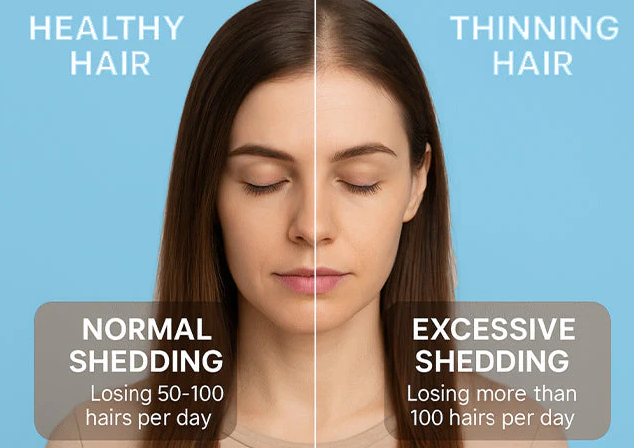
How Many Hairs Fall Out Daily The average scalp contains 100,000 to 150,000 hair follicles. At any given time, 85% to 90% of hairs are in the growing phase while 10% to 15% are in the resting or shedding phase. Shedding 50 to 100 hairs per day falls within the normal range. This includes hairs lost during showering, brushing, and throughout the day. People with longer hair notice shedding more because each hair takes up more visual space. Those with curly or coily hair may shed less daily because shed hairs get trapped in curls until washing. Shedding up to 150 hairs on wash days after two or three days without washing is also normal because the trapped hairs all release at once. Tracking shedding by counting hairs in the shower drain creates unnecessary anxiety. A better method is the pull test: gently tugging on a small section of hair. Losing 2 to 5 hairs per tug is normal. Losing more than 10 hairs consistently signals a problem. No number applies to everyone equally. Seasonal shedding increases in late summer and early fall, lasting 6 to 8 weeks, without indicating permanent loss.
Telogen Effluvium Triggers and Timeline Telogen effluvium is temporary hair shedding triggered by stress, illness, medication changes, or nutritional deficiencies. Common triggers include high fever, surgery, childbirth, rapid weight loss, stopping birth control pills, or severe emotional stress. The shedding starts 2 to 4 months after the trigger, not immediately. This delay confuses many people who cannot connect the shedding to the cause. Shedding in telogen effluvium is diffuse, meaning hair thins evenly across the scalp rather than in bald patches. Losing 300 to 500 hairs daily during the peak of telogen effluvium is common. The condition resolves on its own once the trigger passes. Full recovery takes 6 to 12 months, with shedding gradually returning to normal. No treatment speeds up recovery significantly, though addressing underlying deficiencies helps. Supplements like biotin or collagen do not stop telogen effluvium because the condition is not a deficiency for most people. The most important action is confirming the trigger has resolved. Repeated episodes of telogen effluvium with different triggers can make hair appear chronically thin. No medication stops the shedding once it starts, but knowing it is temporary provides reassurance.
When to See a Doctor About Thinning Certain signs indicate that shedding has progressed to hair loss requiring medical evaluation. Bald patches that are completely smooth and round suggest alopecia areata, an autoimmune condition. A receding hairline in a specific pattern, especially with thinning at the crown, indicates androgenetic alopecia (male or female pattern baldness). Burning, itching, or scaling along with hair loss points to fungal infection or inflammatory conditions. Sudden shedding that continues beyond six months without an obvious trigger needs blood work to check thyroid, ferritin, and vitamin D levels. Losing hair from eyebrows or eyelashes along with scalp hair is never normal. Hair that breaks off mid-shaft rather than falling out from the root suggests damage, not true loss. Keeping photos taken in the same lighting and part line every three months helps track progression. No home remedy treats autoimmune or hormonal hair loss. Waiting too long to seek help reduces treatment options because some conditions cause permanent scarring. For androgenetic alopecia, early treatment with topical minoxidil or prescription medications preserves existing hair better than starting after significant thinning.