The earliest known sculptures date to the Paleolithic era. The Venus of Willendorf (circa 25,000 BCE), a small limestone figure of a woman, is a celebrated example. These prehistoric figurines likely served ritual or fertility purposes. As civilizations developed, sculpture became monumental. Ancient Egypt produced colossal statues of pharaohs and gods, carved from granite and diorite, with a rigid, frontal style meant to endure for eternity. The Great Sphinx of Giza remains an iconic testament.
Ancient Greece revolutionized sculpture by introducing naturalism and the ideal human form. Early kouros (youth) figures were stiff, but by the Classical period (5th century BCE), sculptors like Polykleitos and Phidias achieved contrapposto – a relaxed, asymmetrical stance that implied movement. The Parthenon marbles exemplify this mastery. Greek sculptors also pioneered bronze casting using the lost‑wax method.
The Romans copied and spread Greek styles but added their own innovations: realistic portrait busts (verism) that captured wrinkles and flaws, and narrative reliefs on triumphal columns like Trajan’s Column. With the rise of Christianity, sculpture shifted to religious themes. Medieval Romanesque and Gothic cathedrals featured elaborate sculptural programs: tympanums, capitals, and gargoyles that told Bible stories to an illiterate populace.
The Renaissance (14th‑17th centuries) revived classical ideals. Donatello’s bronze David (1440s) was the first free‑standing nude statue since antiquity. Michelangelo’s Pietà and David (1501‑1504) remain unsurpassed in their anatomical precision and emotional power. Bernini, the Baroque master, brought sculpture into dynamic motion, as seen in Apollo and Daphne (1625), where marble seems to transform into living flesh.
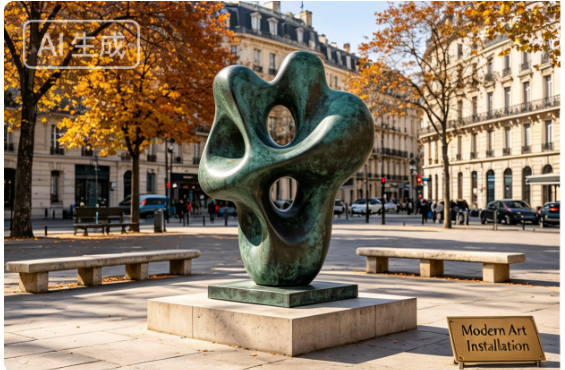
The 19th century saw a break from tradition. Auguste Rodin’s The Thinker and The Gates of Hell emphasized expression and unfinished surfaces, challenging academic polish. Modernism further expanded sculpture’s boundaries. Constantin Brâncuși reduced forms to their essence (e.g., Bird in Space). Pablo Picasso and Alexander Calder introduced assemblage and mobiles. Henry Moore and Barbara Hepworth carved organic abstractions with hollow spaces.
The late 20th century brought minimalism (Donald Judd, Carl Andre), earthworks (Robert Smithson’s Spiral Jetty), and installation art. Contemporary sculpture now incorporates video, sound, light, and digital fabrication. 3D printing and CNC milling allow artists to realize complex geometries impossible by hand. Yet traditional carving and modeling persist. Sculpture remains a vital, evolving dialogue between material, form, and meaning.