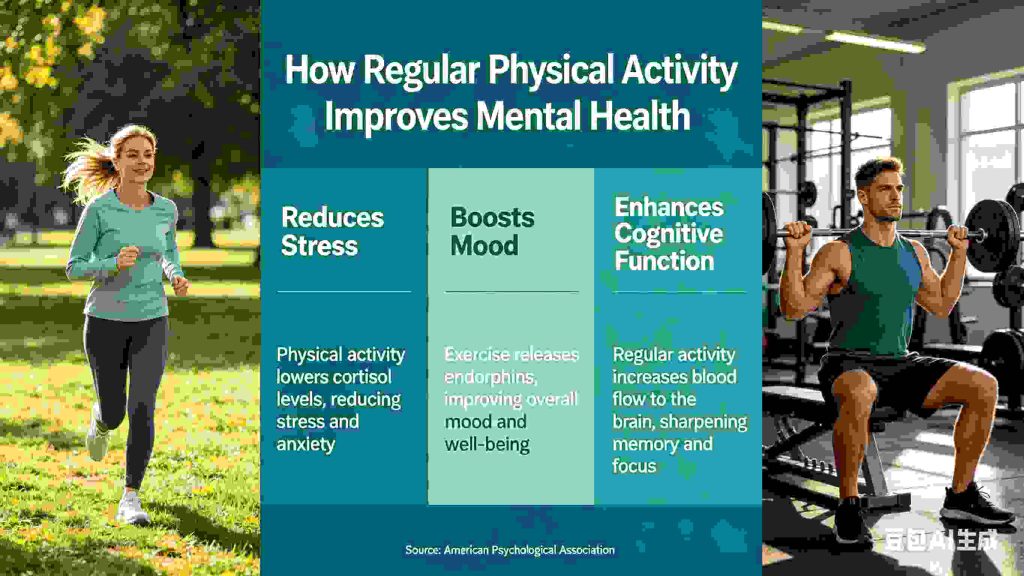
Exercise stimulates the release of endorphins, which are natural mood enhancers. These chemicals help reduce stress and create a sense of well-being, making exercise a powerful tool for improving mood.
Regular physical activity can reduce symptoms of anxiety and depression. Engaging in exercise provides a healthy outlet for stress and helps regulate emotional responses.
Exercise also improves sleep quality, which is closely linked to mental health. Better sleep supports cognitive function and emotional stability.
Social interaction through group activities or sports can enhance mental well-being. Connecting with others during exercise reduces feelings of isolation.
Physical activity boosts self-confidence by improving physical fitness and body image. Achieving fitness goals creates a sense of accomplishment.
Exercise can serve as a form of mindfulness. Focusing on movement helps individuals stay present and reduces negative thought patterns.
Consistency is key to experiencing mental health benefits. Regular activity leads to long-term improvements in emotional well-being.
Ultimately, physical activity supports both the body and mind. Incorporating exercise into daily routines can significantly enhance mental health.