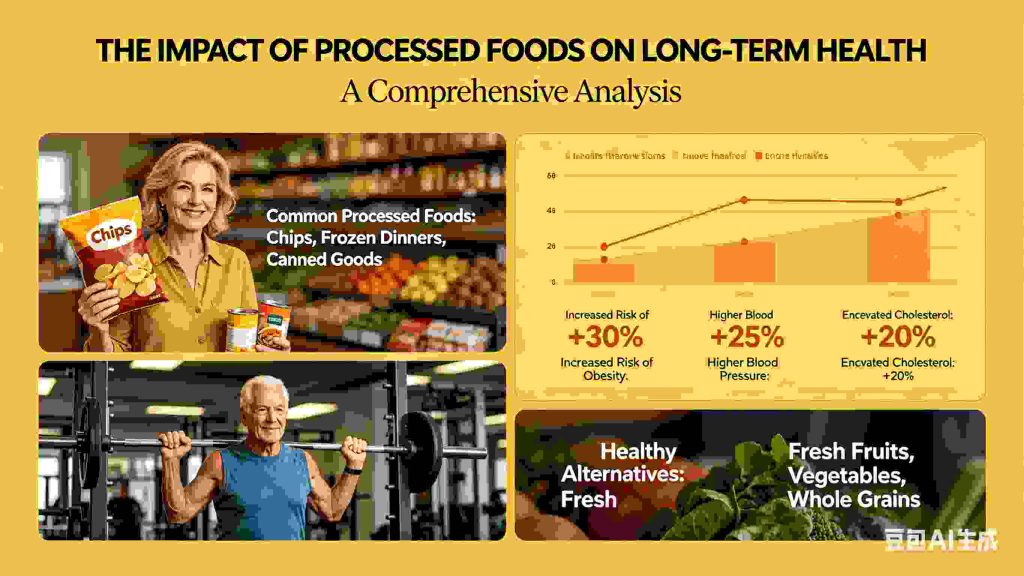
Highly processed foods are often calorie-dense but nutrient-poor. They provide energy without essential vitamins and minerals, leading to imbalanced nutrition over time.
Excess sugar in processed foods contributes to weight gain and increases the risk of metabolic disorders. Frequent consumption can lead to blood sugar fluctuations and insulin resistance.
Unhealthy fats, such as trans fats, are commonly found in processed foods. These fats can increase bad cholesterol levels and raise the risk of heart disease.
Additives and preservatives are used to enhance flavor and extend shelf life. While generally considered safe in small amounts, long-term consumption may have negative effects on health.
Processed foods are often designed to be highly palatable, making them easy to overconsume. This can lead to excessive calorie intake and poor eating habits.
Replacing processed foods with whole foods improves nutrient intake and supports overall health. Even small changes can make a significant difference over time.
Reading food labels helps identify unhealthy ingredients. Being aware of what goes into food allows for better decision-making.
Ultimately, reducing processed food intake is about balance. By prioritizing whole foods and minimizing highly processed options, individuals can support long-term health.