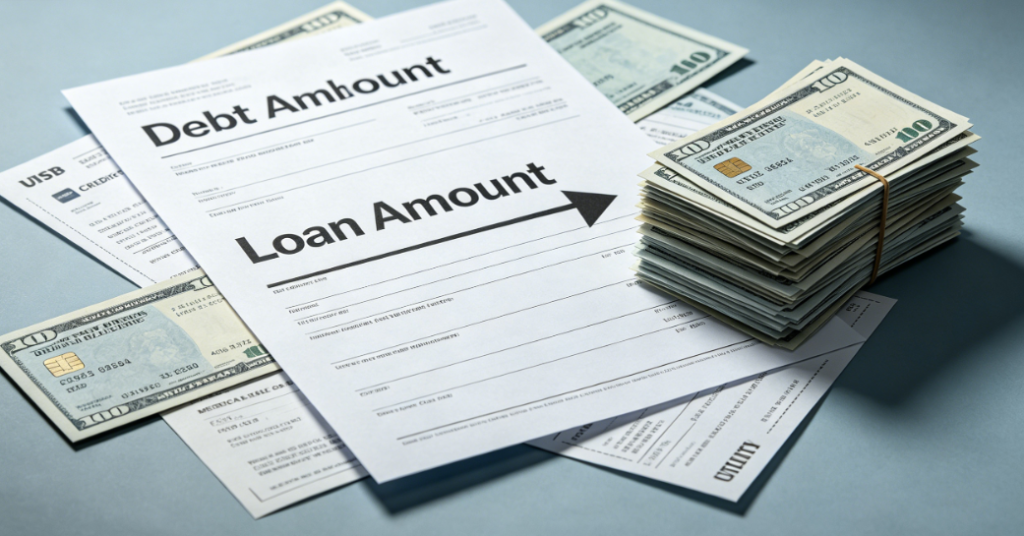
Part 1: How Debt Consolidation Works Step one: you apply for a loan. The amount equals the total of all your old debts.
Step two: the loan is approved. Funds are given to you. You use them to pay off credit cards, personal loans, medical bills.
Step three: you close those old accounts. Or at least bring the balances to zero.
Step four: you start making monthly payments on the new loan. Only one payment. One due date. One interest rate.
Key condition: the new loan’s interest rate must be lower than the average rate of your old debts. Otherwise, consolidation does not make sense.
Part 2: When Consolidation Makes Sense Old debts have high interest rates. Credit card rates are often very high. If you can get a consolidation loan with a lower rate, you pay less interest each month.
Monthly payments are hard to manage. Multiple due dates are easy to miss. One due date is harder to miss.
You want to stop credit card interest from accruing. Credit card interest accrues daily. Consolidation loans typically have a fixed repayment schedule.
You have stable income. Consolidation loans require fixed monthly payments. If your income is unstable, you may struggle.
Your credit score is decent. Better credit scores get lower consolidation loan rates.
Part 3: When Consolidation Does Not Make Sense The new loan’s rate is not lower. If the new rate is the same or higher, you are not saving money. You may pay more.
You have not fixed your spending habits. If you consolidate and then keep using credit cards, you will be back where you started – or worse. Now you have a consolidation loan plus new credit card debt.
Consolidation loan fees are high. Some loans charge application fees, prepayment penalties, monthly service fees. These fees can cancel out interest savings.
Your debt is small. If your total debt is small, the hassle of consolidation may not be worth it.
Your income is unstable. Consolidation loans require fixed monthly payments. If your income fluctuates, you may miss payments.
Part 4: Preparation Before Applying List all debts. Write them down. For each: principal balance, interest rate, monthly payment, remaining term. You cannot plan without knowing where you start.
Check your credit score. Your score affects approval and interest rates. If your score is low, spend time improving it first.
Calculate the loan amount you need. Do not borrow extra. Borrow only enough to pay off old debts. Extra money is not income. It is more debt.
Compare multiple lenders. Banks, credit unions, online platforms. Rates and terms vary widely.
Read the terms. Is the rate fixed or variable? Is there an application fee? Is there a prepayment penalty?
Part 5: Application Process Choose a lender. Based on your credit score and needs, pick the lender most likely to approve you.
Submit application. Provide personal information, income proof, debt information. The lender will check your credit.
Wait for decision. Typically a few hours to a few days. If approved, you receive the loan amount and rate.
Accept terms. If you accept, sign the loan agreement.
Receive funds. Funds go to your bank account. Or directly to your creditors.
Pay off old debts. Use the money to pay off all old debts. Keep proof of payment.
Start repaying the new loan. Set up automatic payments. Do not miss the first payment.
Part 6: What to Do After Consolidation Do not close all credit cards. Closing old accounts may lower your credit score. Keep one or two old cards, but do not use them.
Change spending habits. Consolidation only fixes past debt. If you continue to overspend, you will be in debt again.
Build an emergency fund. If you have cash reserves, you will not need credit cards for unexpected expenses.
Pay on time. Consolidation loan rates often depend on your credit. One late payment could trigger a rate increase.
Pay early if possible. Pay off the consolidation loan ahead of schedule. But confirm there is no prepayment penalty.
Part 7: Alternatives to Consolidation Loans Balance transfer credit card. Move credit card debt to a card with a 0% introductory rate. Pay off the debt during the promotional period. But the rate jumps after the period ends.
Debt management plan. Work with a non-profit credit counseling agency. They negotiate lower rates with creditors. You pay them one monthly payment, and they distribute to creditors.
Direct negotiation with creditors. Call your credit card company. Ask for a lower rate. If they think you might not pay, they sometimes agree.
Bankruptcy. Last resort. Severely affects your credit for many years. But in extreme cases, it can eliminate or restructure debt.
Part 8: Common Mistakes Using credit cards again after consolidation. This is the most common mistake. Consolidation frees up credit limits. If you keep spending, you end up with a consolidation loan plus new credit card debt.
Focusing only on the monthly payment. The monthly payment may be lower because the term is longer. But total interest may be higher. Focus on total cost, not just the payment.
Borrowing more than needed. Approved for ten thousand, but your debt is only eight thousand. The extra two thousand is not free money. It is more debt.
Ignoring fees. Consolidation loans may have fees. Add these fees to your total cost calculation.
Not reading the contract. Variable rates can rise. Prepayment penalties can be high. Understand every term before signing.
Conclusion Debt consolidation is a tool. Whether it helps or hurts depends on how you use it.
Used correctly: you get a lower interest rate, simplify your payments, and pay off debt systematically.
Used incorrectly: you continue to overspend, end up with a consolidation loan plus new debt, and end up worse than before.
Before applying, ask yourself: have I fixed the root problem that caused the debt? If yes, consolidation can help. If no, fix that problem first.