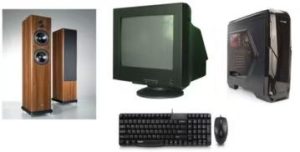
The early days of HCI were characterized by complex, unintuitive interfaces that required specialized knowledge to use. Punch cards and command-line interfaces were the primary means of interacting with computers, limiting their accessibility to a small group of experts. The introduction of the keyboard and mouse in the 1980s revolutionized HCI, making computers more accessible to the general public. These input devices allowed users to interact with computers in a more intuitive way, using point-and-click and typing to perform tasks. The 2000s saw the rise of touchscreens, with the launch of smartphones and tablets. Touchscreens introduced a more natural way of interacting with computers, allowing users to use their fingers to tap, swipe, and pinch to perform tasks. This made computing even more accessible, with people of all ages and backgrounds able to use smartphones and tablets with minimal training. In recent years, voice recognition technology has become increasingly popular, with virtual assistants such as Siri, Google Assistant, and Alexa enabling users to interact with computers using natural language. Voice recognition has made HCI even more intuitive, allowing users to perform tasks such as sending messages, searching the web, and controlling smart home devices without touching a screen or keyboard. In 2026, the most exciting innovation in HCI is brain-computer interfaces (BCIs). BCIs are devices that connect the human brain to a computer, allowing users to control computers using their thoughts. BCIs work by detecting electrical signals from the brain, which are then processed and translated into commands that the computer can understand. This technology has the potential to revolutionize HCI, particularly for people with disabilities who are unable to use traditional input devices. Major tech companies and research institutions are investing heavily in BCI technology. For example, Neuralink, founded by Elon Musk, has developed a BCI that is implanted in the brain, allowing users to control computers and mobile devices using their thoughts. In 2026, Neuralink’s BCI has been approved for use in humans, with early trials showing promising results. For example, a patient with paralysis was able to control a wheelchair and type messages using their thoughts, improving their quality of life significantly. Non-invasive BCIs are also being developed, which do not require surgery. These devices use sensors placed on the scalp to detect brain signals, making them more accessible and less risky. For example, a non-invasive BCI developed by a startup allows users to control a computer mouse using their thoughts, with no need for surgery. This technology is being used to help people with disabilities, such as those with spinal cord injuries, to interact with computers and other devices. Gesture recognition is another major innovation in HCI. Gesture recognition technology uses cameras and sensors to detect hand and body movements, allowing users to control computers using gestures. This technology is being used in virtual reality (VR) and augmented reality (AR) applications, where users can interact with digital content using natural gestures. For example, a VR game allows users to pick up and move virtual objects using their hands, creating a more immersive experience. Eye-tracking technology is also transforming HCI. Eye-tracking devices use cameras to track the user’s eye movements, allowing users to control computers by looking at specific areas of the screen. This technology is particularly useful for people with disabilities who are unable to use their hands, as it allows them to interact with computers using only their eyes. Eye-tracking is also being used in marketing and user research, allowing companies to track how users interact with websites and applications. The impact of these HCI innovations is significant. For people with disabilities, BCIs, gesture recognition, and eye-tracking technology are enabling greater independence and accessibility. For example, a person with amyotrophic lateral sclerosis (ALS) can use a BCI to communicate with others, control their environment, and access information, improving their quality of life. For the general public, these technologies are making computing more natural and intuitive, reducing the learning curve and making computers more accessible to everyone. In the workplace, HCI innovations are improving productivity and collaboration. For example, gesture recognition and voice recognition allow employees to interact with computers hands-free, enabling them to multitask more effectively. BCIs could eventually allow employees to communicate with each other and with computers using their thoughts, reducing the need for verbal or written communication. Despite their potential, HCI innovations still face several challenges. One of the biggest challenges for BCIs is accuracy. Current BCIs are not always accurate, and they can be affected by noise and interference. Researchers are working to improve the accuracy of BCIs, making them more reliable and effective. Another challenge is privacy and security. BCIs collect sensitive data about the user’s brain activity, which could be used to infer personal information such as thoughts, emotions, and preferences. This raises privacy concerns, requiring robust security measures to protect user data. The cost of HCI technologies is also a challenge. BCIs, in particular, are expensive, making them inaccessible to many people. However, as the technology matures and economies of scale are achieved, the cost is expected to decrease. Looking ahead, HCI will continue to evolve, with more natural, intuitive interfaces that blur the line between humans and computers. BCIs, gesture recognition, and eye-tracking technology will become more advanced and accessible, transforming how we interact with computers and each other. For the computer industry, the future of HCI is about creating interfaces that are not just functional, but also natural and human-centric.