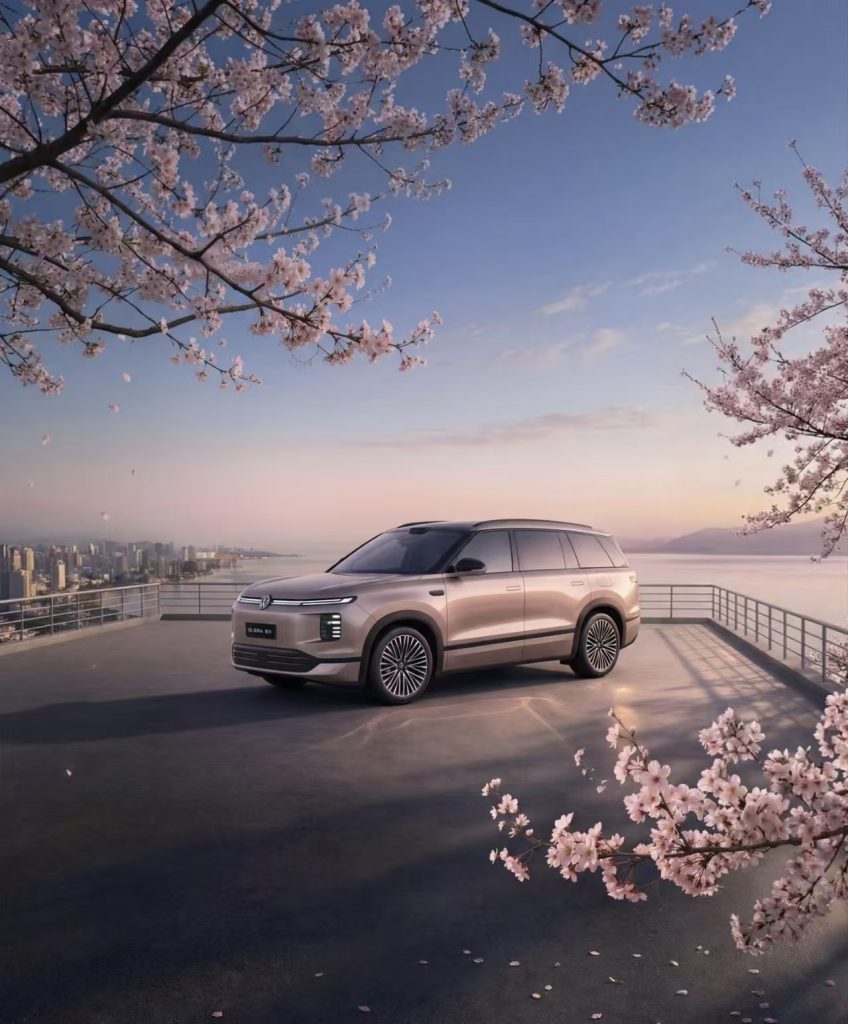
The rise of Chinese automobile brands is mainly reflected in three aspects: first, the rapid growth of domestic market share. In 2025, the market share of Chinese automobile brands in the domestic new car market reached 55%, exceeding the total market share of international brands. Among them, the market share of Chinese new energy automobile brands reached 80%, occupying an absolute dominant position. BYD, GAC Aion, Geely, Great Wall and other Chinese automobile brands have become the favorite choices of domestic consumers. Second, the continuous improvement of independent research and development capabilities. Chinese automobile brands have increased investment in research and development, and have made remarkable achievements in battery technology, electric drive technology, intelligent technology and other fields. For example, BYD has independently developed blade batteries, DM-i super hybrid technology and e-platform 3.0, which have obvious advantages in performance and cost. Third, the rapid expansion of the global market. In 2025, the export volume of Chinese automobiles reached 4.8 million units, surpassing Japan to become the world’s largest automobile exporter. Chinese automobile brands have entered more than 150 countries and regions around the world, and have gained wide recognition from global consumers. The competitive advantages of Chinese automobile brands mainly include three aspects: first, the advantages of new energy technology. Chinese automobile brands took the lead in laying out the new energy automobile field, and have formed a complete industrial chain from battery, electric drive to vehicle manufacturing. The performance and cost of new energy vehicles of Chinese brands have obvious advantages compared with international brands. For example, BYD’s blade battery has higher safety and energy density than ternary lithium batteries of international brands, and the cost is 10-15% lower. Second, the advantages of intelligence. Chinese automobile brands have closely combined new energy vehicles with intelligent technology, and have launched a number of intelligent models with advanced functions such as autonomous driving, intelligent cockpit and Internet of Vehicles. The intelligent level of Chinese new energy vehicles is ahead of international brands, which has won the favor of young consumers. Third, the cost advantage. Chinese automobile brands have the advantages of low production cost and high cost performance due to the complete industrial chain and large-scale production. The price of new energy vehicles of Chinese brands is generally 20-30% lower than that of international brands of the same level, which has strong competitiveness in the global market. In terms of global market expansion, Chinese automobile brands have adopted different strategies according to the characteristics of different markets. In Southeast Asia, South America and other emerging markets, Chinese automobile brands mainly focus on low-to-medium-end new energy vehicles and fuel vehicles, relying on cost advantages to occupy the market; in Europe, North America and other mature markets, Chinese automobile brands mainly focus on mid-to-high-end new energy vehicles, relying on technology and quality to gain recognition. For example, BYD has entered the European market with models such as Han, Tang and Atto 3, and has achieved good sales results; NIO has launched its products in Germany, Norway and other countries, and has built a complete after-sales service system. However, Chinese automobile brands still face some challenges in the global market. First, the brand influence is relatively weak. Compared with international brands with a history of hundreds of years, Chinese automobile brands have a short development history, and the brand influence in the global market is still relatively weak. Second, the technical barriers of mature markets. Europe, North America and other mature markets have strict technical standards and emission standards, which bring certain challenges to the entry of Chinese automobile brands. Third, the lack of after-sales service system. In some emerging markets, the after-sales service system of Chinese automobile brands is not perfect, which affects the user experience. Fourth, the trade barriers. Some countries have set up trade barriers to protect their own automobile industry, which hinders the global expansion of Chinese automobile brands. In the future, Chinese automobile brands will further strengthen independent research and development, improve product quality and technical level, and enhance brand influence. At the same time, they will continue to expand the global market, improve the after-sales service system, and break through trade barriers. With the continuous improvement of comprehensive strength, Chinese automobile brands will surely play a more important role in the global automobile market, and realize the transformation from a “big automobile country” to an “automobile power”.