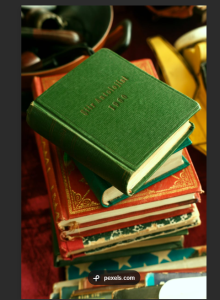
When readers think of dystopian fiction, two titles come to mind immediately: George Orwell’s “1984” (1949) and Aldous Huxley’s “Brave New World” (1932). Both novels imagine terrifying futures. But the terrors are opposite. Orwell feared a world controlled by force, surveillance, and propaganda. Huxley feared a world controlled by pleasure, drugs, and shallow happiness. This article compares the two visions. It examines their methods of control, their views of human nature, and their predictions for society. Both novels were warnings. Which one was more accurate? The answer may be unsettling.
Body:
Methods of Control: Pain vs. Pleasure In “1984,” the Party controls through pain. The Thought Police monitor every citizen. Telescreens broadcast propaganda 24 hours a day. The Ministry of Truth rewrites history. The Ministry of Love tortures dissenters. Winston Smith’s greatest fear is Room 101, where he will face his worst nightmare (rats). The Party does not want loyalty. It wants obedience through terror. In “Brave New World,” the World State controls through pleasure. Citizens take a drug called soma. It produces euphoria without side effects. They are conditioned from birth to love their social roles. They have casual sex without commitment. They have no art, no literature, no religion. They are happy. But it is a shallow, engineered happiness. The Controller, Mustapha Mond, explains that the World State sacrificed truth for stability. The methods are opposite, but the goal is the same: to eliminate individual thought and dissent.
The Role of Language Orwell was obsessed with language. In “1984,” the Party invents Newspeak, a language designed to shrink vocabulary. Words that could express rebellion are eliminated. The word “free” remains only in the phrase “free from lice.” The Party understands that if you cannot think a thought, you cannot rebel. Winston tries to write a diary, an act of rebellion. He buys an antique paperweight, a symbol of the past. The Party controls history as well as language. Huxley was less interested in language. In “Brave New World,” the language is deliberately flat and cliché-ridden. Characters say “oh, Ford” instead of “oh, God.” (Henry Ford is worshipped as a prophet of mass production.) The lack of literary quality is intentional. Huxley shows a culture that has abandoned deep thought. Soma provides contentment. No one needs poetry. The two novels agree that language is a tool of control, but they emphasize different aspects. Orwell focuses on what you cannot say. Huxley focuses on what you no longer want to say.
The Individual vs. Society Both novels feature protagonists who try to rebel. Winston Smith in “1984” falls in love with Julia. Their affair is an act of rebellion. They rent a room above Mr. Charrington’s antique shop, a space free from telescreens. Winston believes he can defeat the Party by joining the underground resistance, the Brotherhood. He is wrong. The Brotherhood does not exist. Mr. Charrington is a member of the Thought Police. Winston is betrayed, tortured, and broken. He ends the novel loving Big Brother. Individual rebellion is impossible. The Party is total. In “Brave New World,” the protagonist is Bernard Marx, an outsider who does not fit. He is smaller than other Alphas. He feels inferior. He takes a woman, Lenina, to a Savage Reservation in New Mexico. There they meet John, the Savage, who was raised outside the World State. John has read Shakespeare. He believes in love, suffering, and tragedy. He returns to London and becomes a sensation. He tries to resist the World State’s pleasures. He refuses soma. He whips himself. But he cannot change society. He ends the novel hanging himself in a lighthouse. Bernard is exiled. The system continues. Individual rebellion fails in both novels. The difference is that Winston is broken by force. John is broken by despair.
Which Prediction Was More Accurate? Orwell wrote “1984” in 1949, after World War II and the rise of Stalinism. He had seen totalitarianism firsthand. He had fought in the Spanish Civil War. His vision was shaped by the Soviet Union, Nazi Germany, and the Cold War. For decades, critics argued that Orwell was more prescient. The surveillance state, the rewriting of history, the cult of personality – all seemed to match real-world dictatorships. Huxley’s vision seemed softer. Soma sounded like a fantasy. But in recent years, Huxley’s vision has become more relevant. Social media provides endless distraction. Streaming services offer on-demand entertainment. Antidepressants and recreational drugs are widely used. Consumer culture encourages immediate gratification. The phrase “brave new world” now feels closer to reality than “1984.” Huxley himself anticipated this. In a 1958 letter, he wrote: “The actual future will be a combination of both nightmares. We will have the surveillance and the soma.”
Conclusion: “1984” and “Brave New World” are not competitors. They are complementary. Orwell warns against the government that tortures. Huxley warns against the society that distracts. The most terrifying future may be the one that combines both. Citizens are watched, but they do not care because they are entertained. History is rewritten, but no one reads it because they are scrolling. Winston Smith lost because he was tortured. John the Savage lost because he could not bear the emptiness. Both novels remain essential because both dangers remain real.